Heritage Meets Hype: The Asian-American Gen Z Designers Flipping the Script on American Fashion
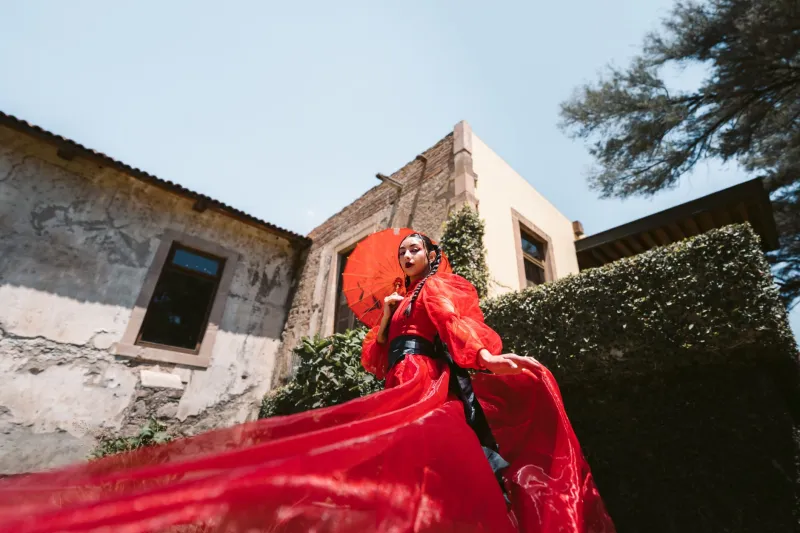
There's a moment that keeps popping up on fashion TikTok lately. A creator pulls out a hanbok jacket — maybe it belonged to their grandmother, maybe it's a thrifted find — and layers it over a cropped hoodie and wide-leg cargos. The comment section explodes. Half the replies are "WHERE IS THIS FROM" and the other half are second-gen Asian kids typing "my mom has the same one" with a string of crying-laughing emojis. That little moment? That's the whole story right there.
Across dorm rooms in LA, Brooklyn apartments, and Chicago studio spaces, a generation of Asian-American creatives is doing something quietly revolutionary. They're not choosing between their parents' culture and the streetwear they grew up loving. They're refusing the choice entirely — and building a new aesthetic language in the process.
Growing Up Between Two Wardrobes
For a lot of second-generation Asian-Americans, the relationship with traditional clothing was complicated. Hanbok, qipao, salwar kameez, ao dai — these were the pieces that came out for Lunar New Year photos or family gatherings, then disappeared back into closets. Meanwhile, the "cool" clothes, the ones that felt safe to wear to school, were a completely different story.
Gen Z is done with that separation. Designers like New York-based Mina Park (whose label MiNa.P went viral after a runway look paired a deconstructed hanbok collar with an oversized bomber) talk openly about designing through that specific tension. "I was always code-switching in my closet," she's said in interviews. "My label exists because I got tired of doing that."
That sentiment resonates loudly with her audience — mostly 18-to-27-year-olds who grew up watching their parents downplay cultural markers to fit in, and who have zero interest in repeating that pattern.
TikTok as the New Runway
The traditional fashion industry path — design school, internship, maybe a spot on a reality competition — isn't the only route anymore, and Asian-American Gen Z creators have been especially savvy about that. TikTok democratized the runway, and they showed up ready.
Creators like @yejistyle (real name Yeji Cho, based in Los Angeles) built followings in the hundreds of thousands by doing exactly what that viral moment described: pulling traditional pieces into everyday fits and breaking down the styling process in real time. Her series "Grandma's Closet" — where she literally raids her halmeoni's wardrobe and rebuilds looks around vintage Korean pieces — has racked up millions of views and spawned dozens of copycat series from Filipino-American, Vietnamese-American, and Chinese-American creators doing the same thing with their own family archives.
What makes these videos land isn't just the aesthetics. It's the storytelling. Viewers aren't just watching an outfit come together — they're getting a crash course in what a piece of fabric means to a family, a community, a history. Fashion as cultural transmission, packaged in a 60-second clip.
When the Industry Finally Showed Up
For years, Asian aesthetics in mainstream American fashion meant one of two things: either a vague, orientalist "Eastern inspiration" that had nothing to do with actual Asian designers, or total invisibility. The conversation has shifted — slowly, imperfectly, but noticeably.
Brands that once ignored this space are now actively seeking out Asian-American collaborators. Streetwear labels like Staple Pigeon and Fear of God adjacents have tapped into the aesthetic, while more niche players — think Eckhaus Latta, Ganni's US partnerships — have started featuring Asian-American designers in capsule projects. The results aren't always perfect, but the demand signal is clear.
More interesting, though, is what's happening at the independent level. Labels built entirely by and for Asian-American audiences are scaling faster than anyone expected. Brand names like Apotheke, Hanpoom, and the buzzy LA-based collective Thread & Root are racking up waitlists and wholesale inquiries without any traditional PR infrastructure — just community, word-of-mouth, and extremely good product photography on Instagram.
Fashion Week is catching up too. NYFW's emerging designer showcases have featured a notably higher proportion of Asian-American designers over the past two seasons, and the critical reception has been strong. Reviewers who once defaulted to describing these collections as "culturally rich" (a phrase that aged badly) are now engaging with the technical craft and conceptual depth on their own terms.
The Aesthetic Itself: What Does It Actually Look Like?
If you're trying to pin down the "Asian-American Gen Z aesthetic," good luck — and also, that's kind of the point. It resists easy categorization, which is part of what makes it interesting.
But there are recurring elements worth noting. Silhouette-forward thinking borrowed from traditional garment construction (the structured shoulders of a Tang jacket, the wrap logic of a kimono) applied to contemporary cuts. Textile mixing that puts silk brocade next to technical fabric or raw denim. Color palettes that lean into jewel tones and ink blacks more boldly than the muted neutrals that dominated American minimalism for a decade. Embroidery and surface detail treated as design features rather than decoration.
And then there's the layering — always the layering. The ability to hold multiple references at once without any single one dominating. That's not just a styling choice. It's a worldview.
More Than a Moment
It would be easy to frame all of this as a trend cycle — Asian-American style has its moment, gets absorbed into the mainstream, and the cycle resets. That reading misses what's actually happening.
The creators and designers driving this movement aren't pitching a trend. They're building infrastructure: labels, platforms, communities, and creative networks that exist independently of whether mainstream fashion decides to pay attention this season or not. The TikTok audiences are loyal in a way that fashion audiences rarely are, because the connection isn't just aesthetic — it's identity-based.
When Yeji Cho posts a new "Grandma's Closet" video, her comment section isn't just fashion fans. It's second-gen kids processing their own relationships with heritage in real time, using her content as a mirror. That's not a trend. That's a cultural conversation, and it's going to keep going.
American fashion has spent decades defining "cool" in ways that left a lot of people out. Gen Z Asian-American creators didn't wait for an invitation to the table. They built a different table, put their grandmothers' fabric on it, and made it look so good that everyone else is pulling up a chair.
And honestly? The fits are incredible.