Sold Out in Minutes: The Asian Pop Invasion Taking Over American Arenas
Remember when "going viral on TikTok" was just a fun little bonus for a musician? These days, for a growing wave of Asian pop artists, it's basically the opening act for a sold-out US stadium tour. The live music landscape in America is shifting fast, and if you've tried to snag tickets to a K-pop or J-pop show lately — and failed — you already know exactly what we're talking about.
This isn't a niche moment anymore. It's a full-blown movement.
The Numbers Don't Lie
Let's just get into it. In recent years, Korean and Japanese acts have been pulling off feats in American venues that even some of the biggest domestic pop stars would envy. Groups like Stray Kids, TWICE, and TOMORROW X TOGETHER have sold out arenas in cities like Los Angeles, New York, Chicago, and Houston — sometimes within minutes of tickets dropping. Meanwhile, solo artists from across Asia are quietly stacking up impressive US touring résumés that would have seemed unthinkable a decade ago.
Live Nation and AEG, the two giants that essentially control the American concert industry, have both taken serious notice. Promoters who once treated Asian pop acts as a specialty booking are now competing aggressively for those deals. "The demand is consistent, the fanbases are incredibly organized, and the production value these artists bring is genuinely world-class," says one independent concert promoter based in Los Angeles who has worked on multiple K-pop tours. "We're not talking about novelty acts. These are full-scale arena productions."
And the venues are getting bigger every cycle. Artists who were playing mid-sized theaters three years ago are now looking at football stadiums. That trajectory is steep — and it's real.
TikTok as the New Tour Bus
So how did we get here? A big part of the answer lives on your phone screen.
TikTok has functioned as a kind of global equalizer for music discovery, and Asian pop artists — many of whom already had massive, highly online fanbases — were positioned perfectly to ride that wave. A choreography clip, a behind-the-scenes moment, a single snippet of a hook — any of these can rack up tens of millions of views overnight and introduce an artist to an American audience that had never heard of them before.
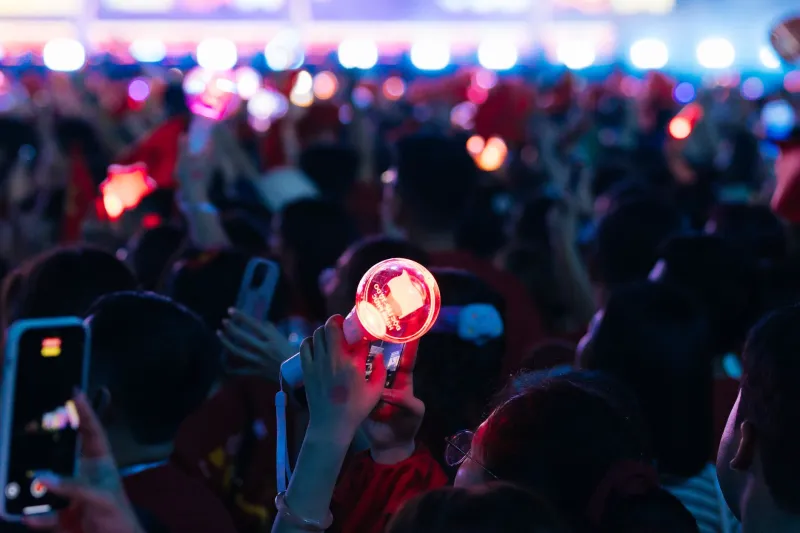
But here's the thing that separates Asian pop fandoms from your average music following: they convert. A casual TikTok viewer doesn't just stream the song — they fall down a rabbit hole, join a fan community, learn the lightstick colors, and start refreshing Ticketmaster at exactly 10:00 AM on sale day. The path from "I just found this group" to "I'm flying to a different city for their concert" can happen in a matter of weeks.
"I found my favorite group through a 15-second video," says Maya, a 24-year-old fan from Atlanta who has attended four concerts across three different states in the past two years. "And now I have friends all over the country because of it. The shows are like reunions."
That sense of community is not accidental.
The Fandom Machine
One of the most underappreciated forces behind the Asian pop concert boom is the sheer organizational sophistication of the fanbases themselves. These aren't passive audiences — they're active participants in an ecosystem that includes fan-run streaming parties, coordinated social media campaigns, group ticket purchases, and meticulously planned fan projects at shows (think: banners, light-up displays, synchronized fan chants that fill entire arenas).
US concert promoters and venue managers have had to genuinely adapt. Some arenas have updated their policies around fan-made signage. Others have extended their merch lines and pre-show logistics specifically to accommodate the scale of demand that Asian pop audiences bring.
"The fans teach each other how to be fans," notes one venue operations manager in New York who asked to remain anonymous. "By the time the show happens, they already know every word, every cue. It makes for an electric atmosphere that artists from any genre would kill for."
Strategic Moves Behind the Scenes
Of course, passion and virality alone don't fill a stadium. There's serious industry infrastructure making all of this work.
Major US labels and management companies have been quietly building partnerships with Asian entertainment agencies for years. These deals go beyond simple distribution — they involve coordinated marketing campaigns, radio promotion, late-night TV appearances, and carefully timed US single releases designed to build momentum before a tour announcement drops.
Some Asian artists have also made savvy moves to embed themselves in American pop culture more broadly: collaborating with US artists, performing at major domestic festivals, and appearing on platforms like NPR's Tiny Desk or even popping up in American TV shows and films. Each of these touchpoints expands the audience a little further.
The result is a machine that, when it fires on all cylinders, can make an artist feel genuinely unavoidable in the American cultural conversation — which is exactly the kind of momentum that translates to record-breaking ticket sales.
What It Means Culturally
Beyond the box office numbers, there's something genuinely meaningful happening here. For a lot of Asian Americans, seeing artists who look like them headlining the same venues that once felt like exclusively Western territory is a big deal. It's representation in one of the most visible spaces in American entertainment.
"Growing up, I never saw anyone who looked like me on a stage that size," says Kevin, a 31-year-old Korean American from the Bay Area. "Now I'm watching a Korean group perform to 50,000 people in my city. That hits different."
And for non-Asian fans — who make up a significant and growing portion of these audiences — the appeal is about something else: the music, the spectacle, the community, the sheer joy of being part of something that feels alive and exciting in a way that can be hard to find elsewhere in pop music right now.
What's Next
Industry insiders are watching a few trends closely. More Asian solo artists — not just groups — are starting to make serious inroads in the US touring market. The festival circuit is also opening up; major American festivals that once overlooked Asian pop acts are now actively courting them as headliners, recognizing that the audience is there and it is enormous.
The ceiling, if there is one, hasn't been found yet. And if the last few years are any indication, the next record to fall is probably already being set up right now — somewhere between a TikTok video going viral and a fan refreshing a ticket link at 9:59 AM.
Asia's vibes have officially found America's biggest stages. And honestly? The shows have never been better.