Press Start: How Asia Rewired the DNA of American Gaming Forever
Walk into any college dorm room, basement setup, or Twitch stream worth its salt in 2025, and you're basically standing inside a love letter to Asian gaming culture — whether the person living there knows it or not. The RGB lighting, the mechanical keyboard obsession, the twelve-hour grind sessions, the hushed reverence for players who've hit Challenger rank or Grand Master status — none of that came out of nowhere. It came from Seoul. It came from Tokyo. It came from the LAN cafes and arcade halls of a continent that decided, long before America did, that gaming was serious business.
And now? It's America's biggest obsession.
The Seoul Blueprint Nobody Talks About Enough
Let's rewind. In the late 1990s and early 2000s, South Korea was doing something that seemed almost alien to Western audiences: treating video game players like professional athletes. StarCraft — a real-time strategy game that most Americans knew as a fun weekend distraction — became a national sport in Korea. Players had coaches, training regimens, and fan clubs. Matches aired on dedicated cable channels. The best players were household names.
That infrastructure — the idea that competitive gaming deserved real institutional support — is the skeleton underneath everything the American esports industry has built. The League of Legends Championship Series, the Valorant Champions Tour, the Call of Duty League — all of them operate on a framework that Korean esports basically invented and stress-tested two decades ago.
"When I was coming up as a player, every serious American gamer knew you had to study the Korean scene," says Marcus Chen, a former semi-pro League of Legends player turned content creator based in Los Angeles. "It wasn't optional. If you wanted to understand what peak performance looked like, that's where you looked. Full stop."
The influence wasn't just strategic. Korean pro players began migrating to American teams throughout the 2010s, bringing with them a work ethic and a competitive philosophy that reshaped team culture across the board. Names like Faker — Lee Sang-hyeok, the T1 mid-laner widely considered the greatest League of Legends player of all time — became legends in American gaming communities even among fans who'd never set foot in Asia.
Japan's Fighting Game Soul
While Korea was building the esports machine, Japan was doing something different but equally powerful: it was keeping the soul of competitive gaming alive in the arcade.
The fighting game community, or FGC, is one of the most culturally rich corners of American gaming — and it is deeply, irreversibly Japanese in its roots. Street Fighter, Tekken, Marvel vs. Capcom, Guilty Gear — these franchises didn't just export games. They exported a whole philosophy about competition: respect your opponent, study your craft, show up to the local tournament even when you're not ready.
Evo, the Evolution Championship Series held annually in Las Vegas, is essentially the Super Bowl of the FGC. And every year, the results board is a testament to the ongoing conversation between Japanese and American players who've been pushing each other for three decades. Japanese legends like Daigo Umehara — whose 2004 comeback moment at Evo is still called "The Moment" and has millions of YouTube views — are revered in American gaming circles the way Michael Jordan is revered in basketball.
"The FGC taught me that losing is part of the process," says Jasmine Okafor, a Tekken competitor and streamer from Atlanta. "That mentality came straight from Japanese competitive culture. You don't rage quit. You lab, you come back, you get better. Americans had to learn that, honestly."
PC Bangs and the Birth of the Streaming Aesthetic
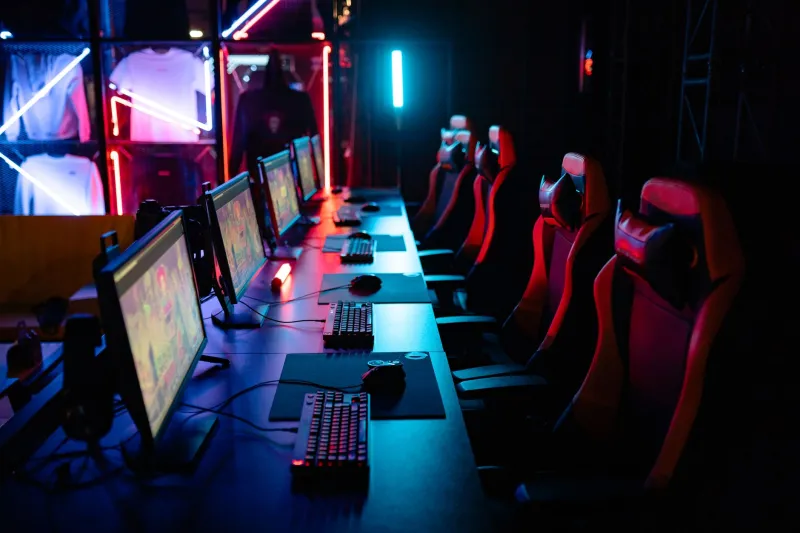
Here's something wild to think about: the way your favorite streamer's setup looks — the dual monitors, the snack-friendly layout, the vibe of gaming as a communal social experience — owes a huge debt to the PC bang culture of South Korea and similar internet café traditions across Southeast Asia.
In those spaces, gaming wasn't something you did alone in your room with the lights off. It was social. It was loud. It was shared. You played next to strangers who became teammates. You ordered food to your station. The atmosphere was electric in a way that American gaming spaces, historically more isolated, hadn't quite captured.
That communal energy translated directly into streaming culture. The best streamers don't just play games — they perform, react, invite their audience into the experience. That's a very "PC bang" sensibility. And as platforms like Twitch and YouTube Gaming exploded, many of the most-watched streamers were either Asian creators or American creators who'd absorbed that aesthetic wholesale.
Valkyrae, one of the most-followed gaming creators on YouTube, has spoken openly about how her Filipino-American background shaped her approach to building community online. "Family is loud, family is together, family is in each other's business," she's said in interviews. "That's how I think about my stream."
The Algorithm Loves What Asia Built
Fast forward to right now, and the numbers are staggering. Esports viewership in the United States has crossed into the tens of millions. Games with deep roots in Asian development and competitive culture — League of Legends, PUBG, Genshin Impact, Valorant — dominate streaming platforms. The most-clipped, most-shared gaming moments increasingly involve players, teams, and storylines that originated in Asia.
Genshin Impact, the free-to-play action RPG developed by Chinese studio miHoYo, has become a genuine cultural phenomenon in the US — spawning fan art communities, cosplay scenes, and content creator ecosystems that feel as passionate and organized as anything surrounding a Marvel franchise. Its anime-influenced art style and gacha mechanics, both deeply embedded in East Asian gaming culture, are now just... normal American gaming stuff.
TikTok and YouTube Shorts have accelerated all of this. Highlight clips from Korean League of Legends matches go viral in Ohio. Japanese speedrunners get fan edits made by kids in Texas. The algorithm doesn't care about geography — it cares about what's exciting, and Asian gaming has been exciting for a very long time.
What Gets Lost (and What Doesn't)
It's worth pausing to note that cultural migration is never perfectly clean. Some of the grind culture that came packaged with Korean competitive gaming has a dark side — burnout, mental health struggles among pro players, and a pressure-cooker environment that's chewed up talented people. American esports organizations are still figuring out how to honor the competitive intensity without destroying the humans inside it.
But the core of what traveled over — the respect for craft, the community-first mentality, the idea that gaming is worth taking seriously as both art and competition — that's embedded now. It's not going anywhere.
America didn't just borrow Asian gaming culture. It built its entire gaming identity on top of it, and the two are so intertwined at this point that trying to separate them would be like trying to separate the hardware from the game. You can't run one without the other.
So next time you're watching a Valorant tournament at two in the morning, or you're deep in a Genshin Impact rabbit hole, or you're arguing about whether Faker is the GOAT — just know you're participating in something that started in a neon-lit room on the other side of the Pacific. And it's only getting bigger from here.